Austria's Path to Modernized Gambling Oversight: Key Regulatory Events and Player Base Changes
Gisela Perry · Oct 4, 2026
Austria's Path to Modernized Gambling Oversight: Key Regulatory Events and Player Base Changes
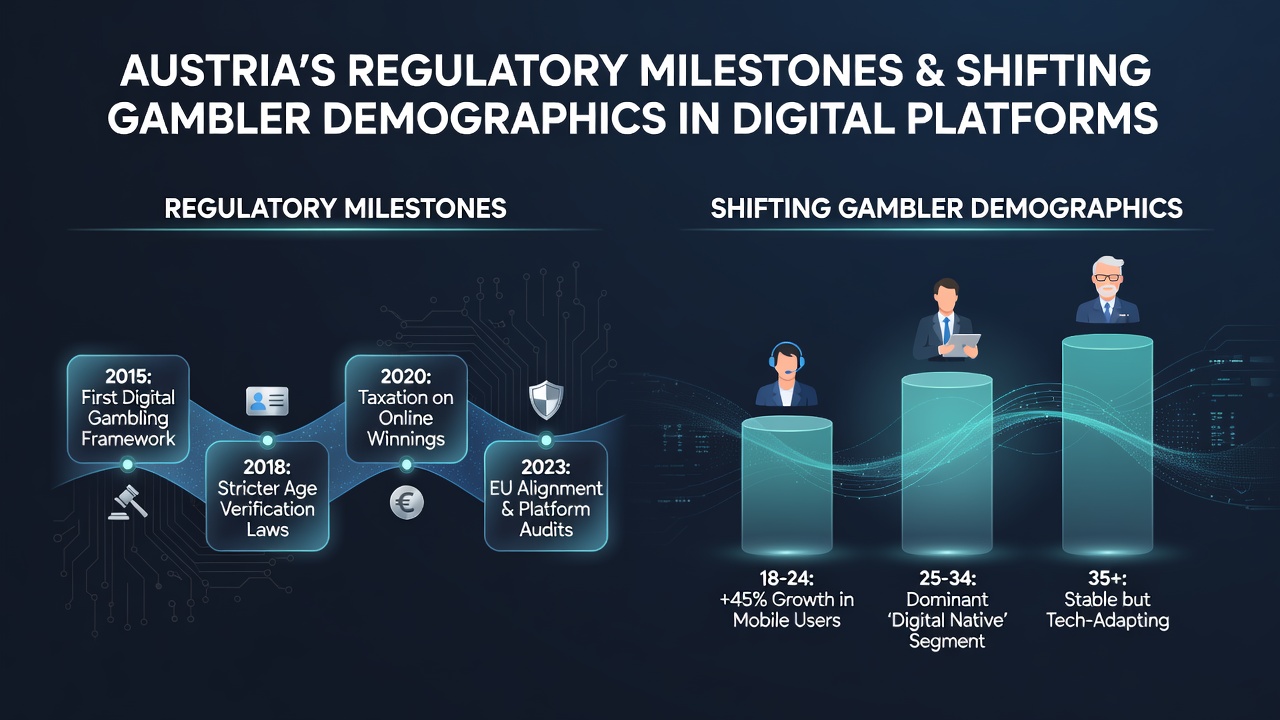
Regulatory developments in Austria have unfolded through a series of legislative adjustments that address both land-based traditions and the rise of digital platforms, with observers noting steady progress toward structured licensing systems since the early 2010s. Data from government reports shows that the 2010 amendment to the Glücksspielgesetz established clearer boundaries for online operators while maintaining state oversight on certain games, and subsequent updates in 2016 introduced technical standards for player protection that aligned with broader EU directives on consumer safeguards.
Those who've tracked these changes point out that by 2021 further refinements required operators to implement geo-blocking and verification protocols, which reduced unauthorized access according to compliance metrics released by Austrian authorities. In October 2026, new reporting requirements took effect that mandate quarterly demographic submissions from licensed platforms, allowing regulators to monitor participation patterns more precisely than in previous years.
Core Legislative Steps That Shaped the Framework
One study released by the Austrian Federal Ministry of Finance revealed how the introduction of a dedicated online gambling concession model in 2013 opened pathways for private entities under strict revenue-sharing rules, whereas earlier monopolistic structures had limited market entry. Experts have observed that these concessions demanded rigorous financial audits and responsible gaming tools, leading to a measurable decline in black-market activity over the following decade as enforcement resources concentrated on licensed channels.
But here's the thing: integration with EU-wide standards around data privacy added another layer, since operators had to synchronize their systems with GDPR provisions that came into force across member states in 2018. Research indicates that this synchronization improved transparency around user data handling, and figures from industry associations show corresponding increases in trust metrics among registered players.
Demographic Patterns Emerging From Platform Data
Shifts in who participates on digital platforms have become evident through aggregated statistics that regulators began collecting systematically after 2016. Younger adults between 25 and 34 now represent a larger share of active accounts compared with earlier periods, while participation among those over 55 has grown steadily though at a slower pace, according to summaries published by European research networks. Gender distributions have also moved, with women comprising roughly 38 percent of registered users in recent tallies versus 29 percent a decade earlier, a change analysts attribute to targeted mobile marketing and safer payment integrations.
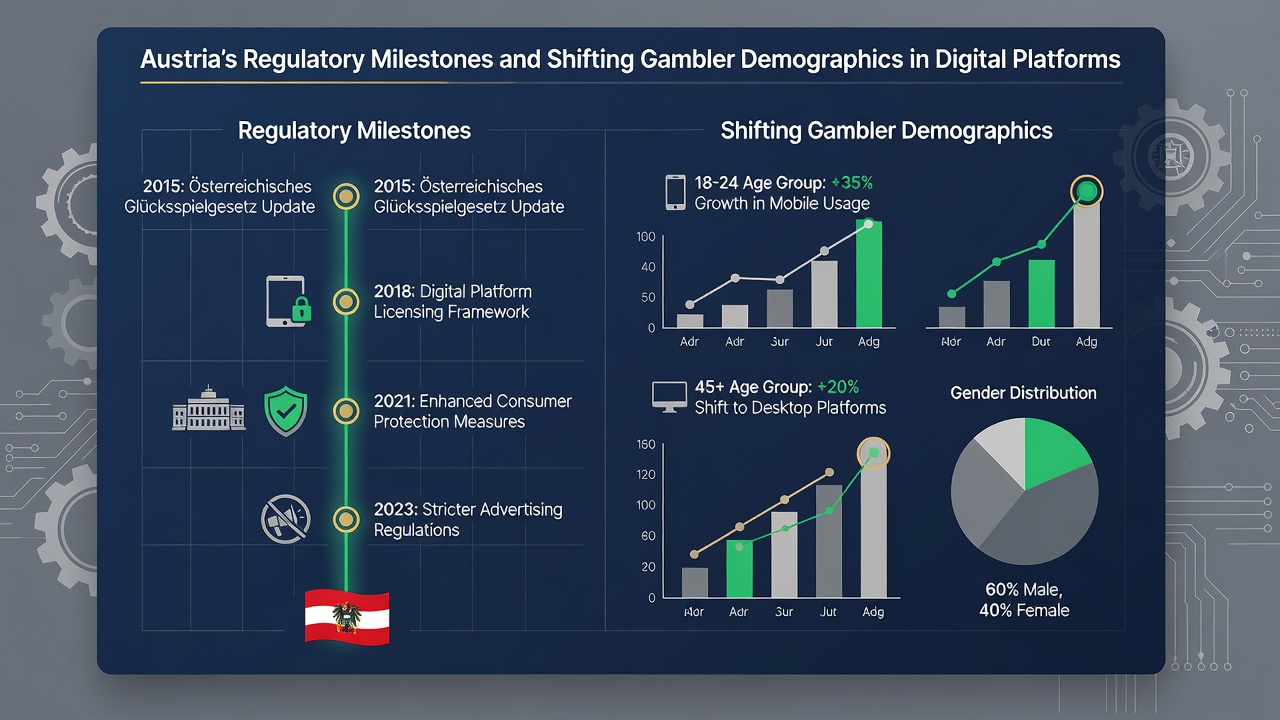
Urban residents continue to dominate usage numbers, yet rural adoption rates have climbed since improved broadband infrastructure reached more regions, as documented in connectivity reports from the Austrian Chamber of Commerce. One analysis from academic researchers at the University of Vienna highlighted how disposable income levels correlate with session frequency, noting that middle-income brackets account for the majority of moderate play activity rather than high-stakes participation.
Intersection of Rules and Player Profiles in Practice
Compliance metrics released in October 2026 illustrate how regulatory tools now capture demographic variables alongside behavioral indicators, enabling authorities to adjust responsible gaming measures more effectively. For instance, mandatory age-verification processes have coincided with reduced sign-up rates among under-25s, while self-exclusion features see higher uptake among the 35-to-44 cohort according to platform disclosures. Industry organizations such as the European Gaming and Betting Association have compiled cross-border comparisons that place Austria's approach alongside developments in Canada and Australia, where similar data-driven oversight models have produced comparable participation adjustments.
What's interesting is that these intersections allow for targeted interventions, such as customized deposit limits based on age-band statistics, without restricting overall market access for compliant operators. Data shows that platforms adopting these refinements report lower dispute volumes and sustained user retention across varied demographic segments.
Conclusion
Collectively, Austria's regulatory milestones and evolving player demographics reflect a system that continues to adapt through evidence-based adjustments rather than wholesale overhauls. Reports scheduled for release after the October 2026 data cycle will likely provide further clarity on long-term trends, and stakeholders across government, academia, and licensed operators will examine those outcomes to refine future policies. This ongoing process underscores how structured oversight and demographic insight work together to maintain a controlled digital environment.