Austria's Digital Gambling Oversight: Intersections of Player Profiles adn Compliance Metrics
Cameron Berger · Sep 20, 2026
Austria's Digital Gambling Oversight: Intersections of Player Profiles adn Compliance Metrics
Austria maintains a structured approach to digital gambling through federal and state-level rules that require operators to collect detailed player profiles while meeting strict compliance standards, and this framework continues to evolve with technological and legal updates expected by September 2026.
Regulatory Foundations and Data Requirements
Legislation such as the Austrian Gaming Act and related provincial ordinances mandates that licensed platforms verify user identities, track betting patterns, and store transaction records for defined periods, whereas unlicensed operations face enforcement actions that include site blocks and fines. Observers note that these rules create a system where every registered account generates a profile containing age confirmation, payment history, and self-exclusion status, which authorities then cross-reference against compliance databases maintained by the Ministry of Finance and regional gaming boards.
Operators must integrate real-time monitoring tools that flag unusual activity, and research from the European Commission indicates such systems reduce unauthorized access incidents across member states when implemented consistently. Data shows that Austrian platforms report aggregated statistics on player volumes and dispute resolutions to oversight bodies on a quarterly basis, creating a feedback loop that informs future rule adjustments.
Player Profiles in Practice
Each profile includes demographic details, deposit limits chosen by the user, and records of any responsible gambling interventions applied by the operator, while algorithms analyze these elements to generate risk scores that trigger additional verification steps. Those who study the sector find that profiles also incorporate geographic data to enforce location-based restrictions, ensuring players from outside permitted jurisdictions cannot access services. Compliance teams review these profiles during audits, and figures from industry reports reveal that accurate profile maintenance correlates with fewer regulatory penalties for operators.
Where Compliance Data Meets Profile Management
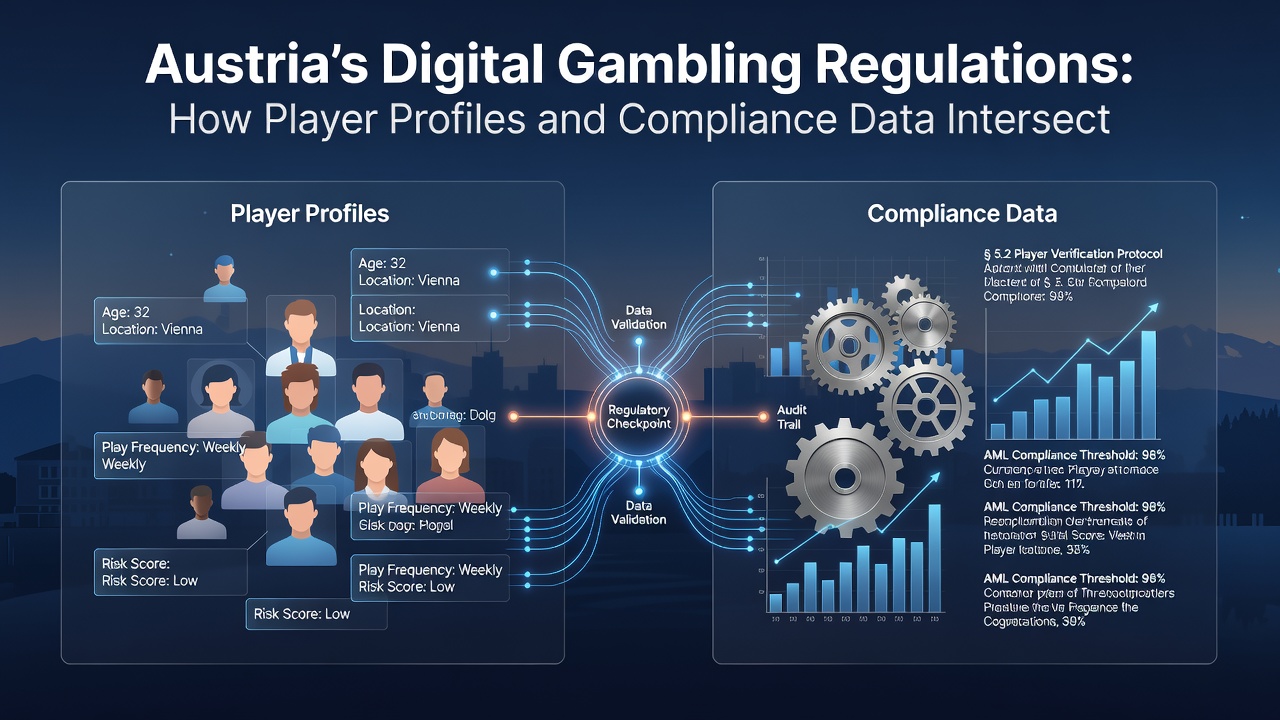
Compliance data encompasses audit logs, anti-money laundering checks, and tax reporting outputs that operators must align with player profile entries, so any mismatch prompts immediate investigation under current statutes. Experts have observed that this intersection allows regulators to identify patterns such as multiple accounts linked to single payment methods or sudden spikes in activity that deviate from a user's established behavior. In September 2026, proposed enhancements to digital identity verification are scheduled to take effect, requiring biometric elements in profile updates for high-volume accounts, which will further tighten data alignment requirements.

Studies conducted by the Australian Gambling Research Centre highlight similar data intersection models in other jurisdictions, and Austrian authorities have referenced these findings when refining their own protocols. One case documented by researchers involved an operator that used compliance flags to update thousands of profiles overnight after detecting coordinated betting rings, demonstrating how the two data streams reinforce each other in real operations.
Technical and Operational Impacts
Platforms employ encrypted databases that separate personally identifiable information from behavioral analytics, yet regulators retain access rights during inspections to verify that profiles match reported compliance metrics. This setup demands ongoing investment in secure infrastructure, and data from trade associations shows that Austrian licensees allocate a measurable portion of revenue to these systems. Observers note that smaller operators sometimes partner with third-party compliance providers to handle the volume of profile checks required under the rules.
Yet the process also generates benefits for users, since verified profiles enable quicker dispute resolutions and clearer records of self-imposed limits that carry across different platforms when shared through central registries. Research indicates that such interoperability reduces duplicate registrations and supports broader responsible gambling goals without compromising individual privacy standards set by EU data protection directives.
Conclusion
Austria's approach demonstrates how player profiles and compliance data function as interconnected components within a regulated digital gambling environment, with scheduled updates in September 2026 set to introduce further refinements to verification processes. Authorities continue to monitor outcomes through regular reporting, while operators adapt their systems to maintain alignment between the two data streams. This structure supports both enforcement priorities and operational transparency across the sector.